with Lucy Commoner, May 2026, for Because, now is the time of monsters
LC: Congratulations on having been selected to participate in this summer's exhibition at the Wassaic Project! Your work has been exhibited throughout the New York state area in galleries and shows. What led you to apply to the Wassaic Project open call for this exhibition, and what has been your experience here?
DG: I have never been to the Wassaic Project, but I knew a little about it. I follow it on Instagram, and that's where I saw the open call.
LC: You are a retired New York City firefighter who has worked since 1978 for many years in highly stressful and dangerous situations. In contrast, creating these incredibly closely observed sculptures of abandoned industrial and institutional buildings must require a very slow, peaceful, and meditative practice. Is there an element of owning or controlling what you went through as a firefighter through your artwork? How do you explain the relationship between these two very different, yet equally fulfilling phases of your life?
DG: Firefighting in NYC and doing my art definitely have some parallels. Firefighting was my primary passion, and when I had to retire due to injuries, making art replaced but did not completely fulfill the space retirement created. Both take extreme focus. My full attention must be on the task at hand. I found that when working on a detailed piece, I can only listen to music but not spoken words. Podcasts and audiobooks are too distracting. Any other thoughts or concerns will break that focus. I've had a meditation practice for many years, and the practices are similar in singleness of purpose. The other process that firefighting and art involve is problem-solving. Firefighting requires split-second decision-making. I thrived on that. Much of my art is also problem-solving, meaning I have to figure out how to create the feeling I am looking for.
LC: As a self-taught artist, you have mastered photography, which you use to beautifully document the abandoned buildings that interest you, as well as the remarkable technical skills that you employ to recreate the aged, deteriorated, and lonely quality of structures that have been overtaken by the forces of nature and human neglect. What was the learning process that you used to arrive at the level of artistic mastery where you are today?
DG: Thank you. I started by looking at other artists' work. If I could meet them, I would pick their brain and ask questions. I started visiting galleries and museums and talking to other artist friends about what we were looking at. I went to their studios and closely observed. I have a large collection of photography books by the photographers who capture the mood and feeling of what I am looking for. Also, most of my life, I have explored abandoned buildings. Way before I made art. Spending time in those buildings inspired me to make art. Then I began taking photos in those buildings. I have a huge archive and often use it for reference. Working on the buildings themselves requires being able to make mistakes and discard what is no longer workable. I've actually found some very effective processes by accident, through mistakes.


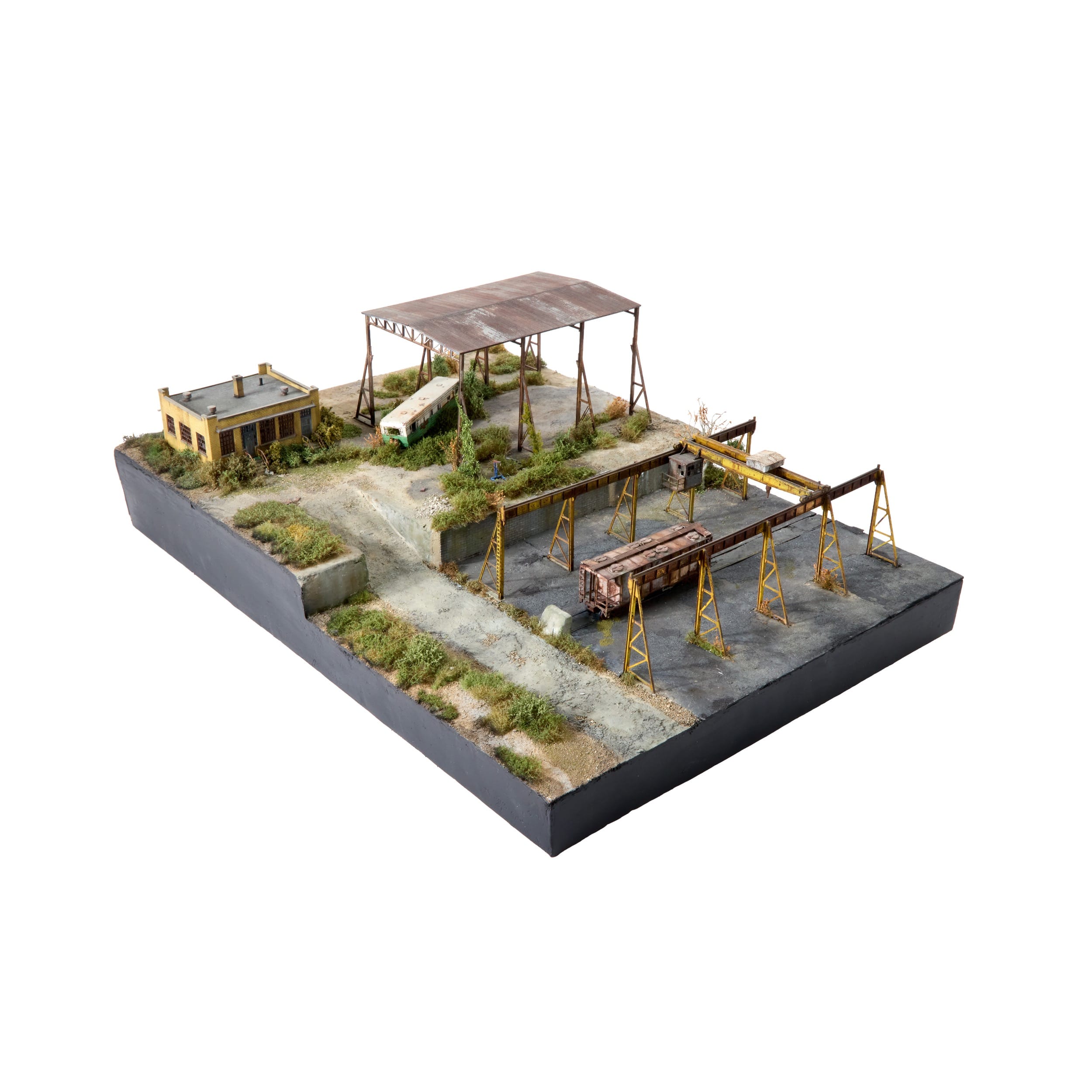
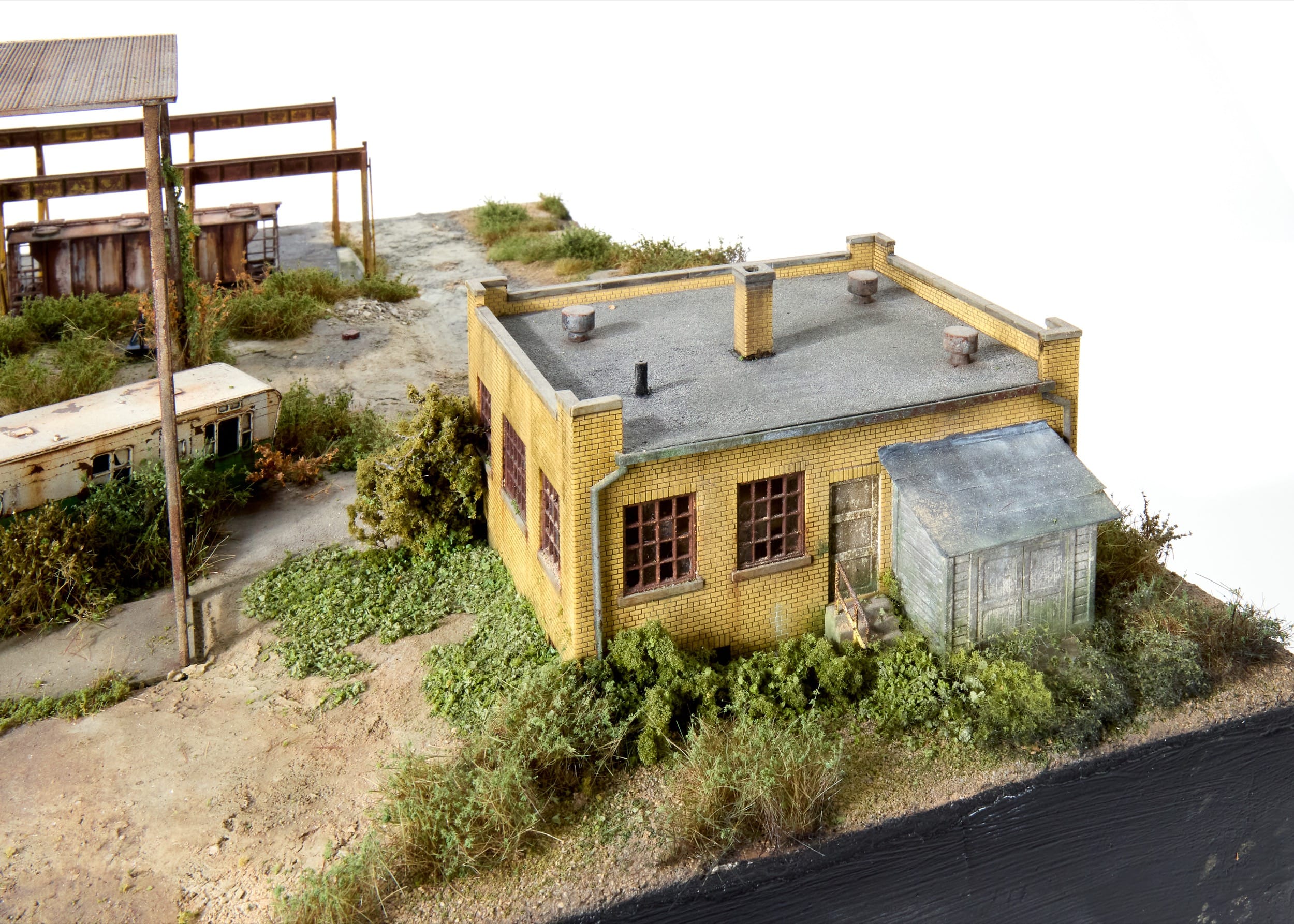
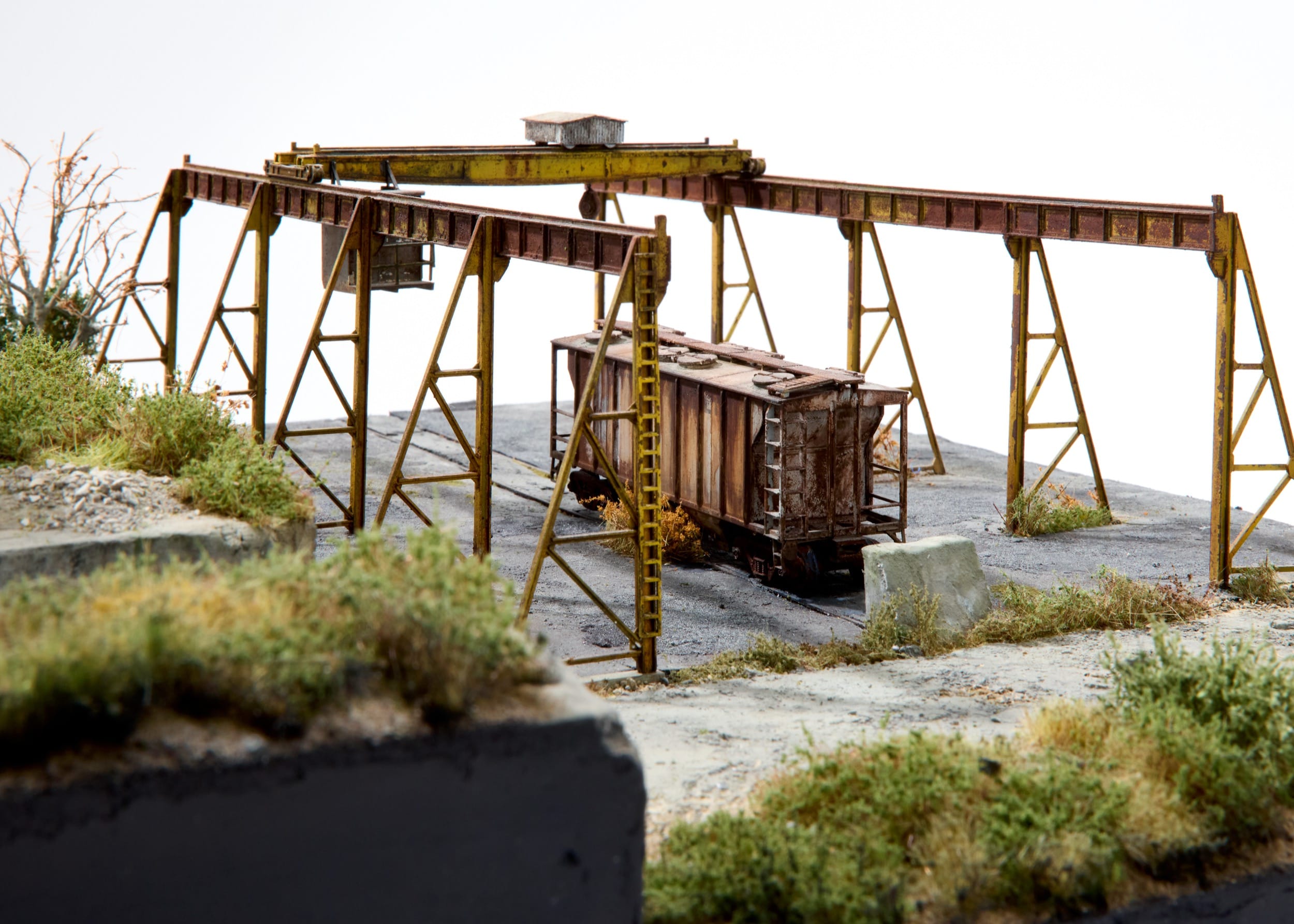
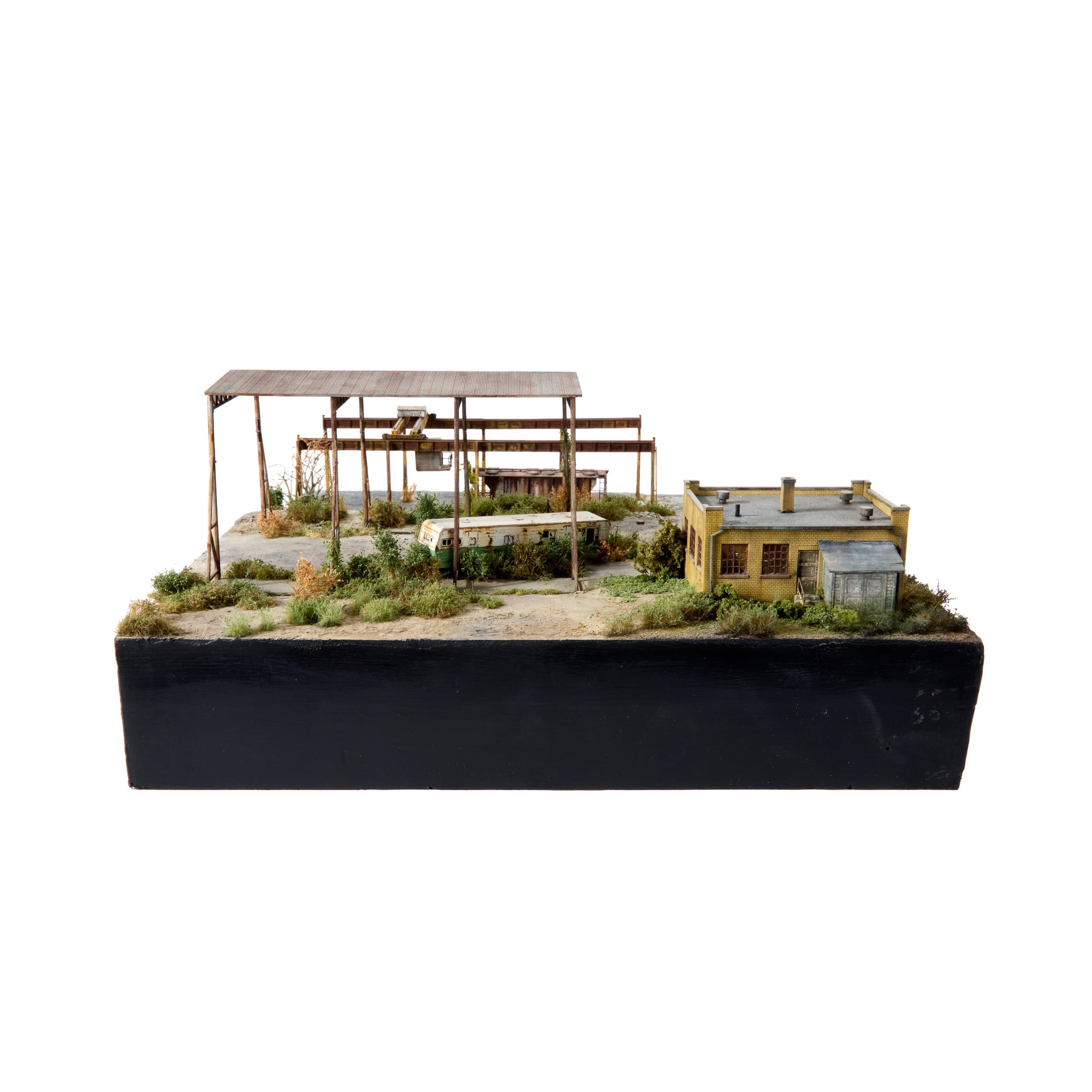
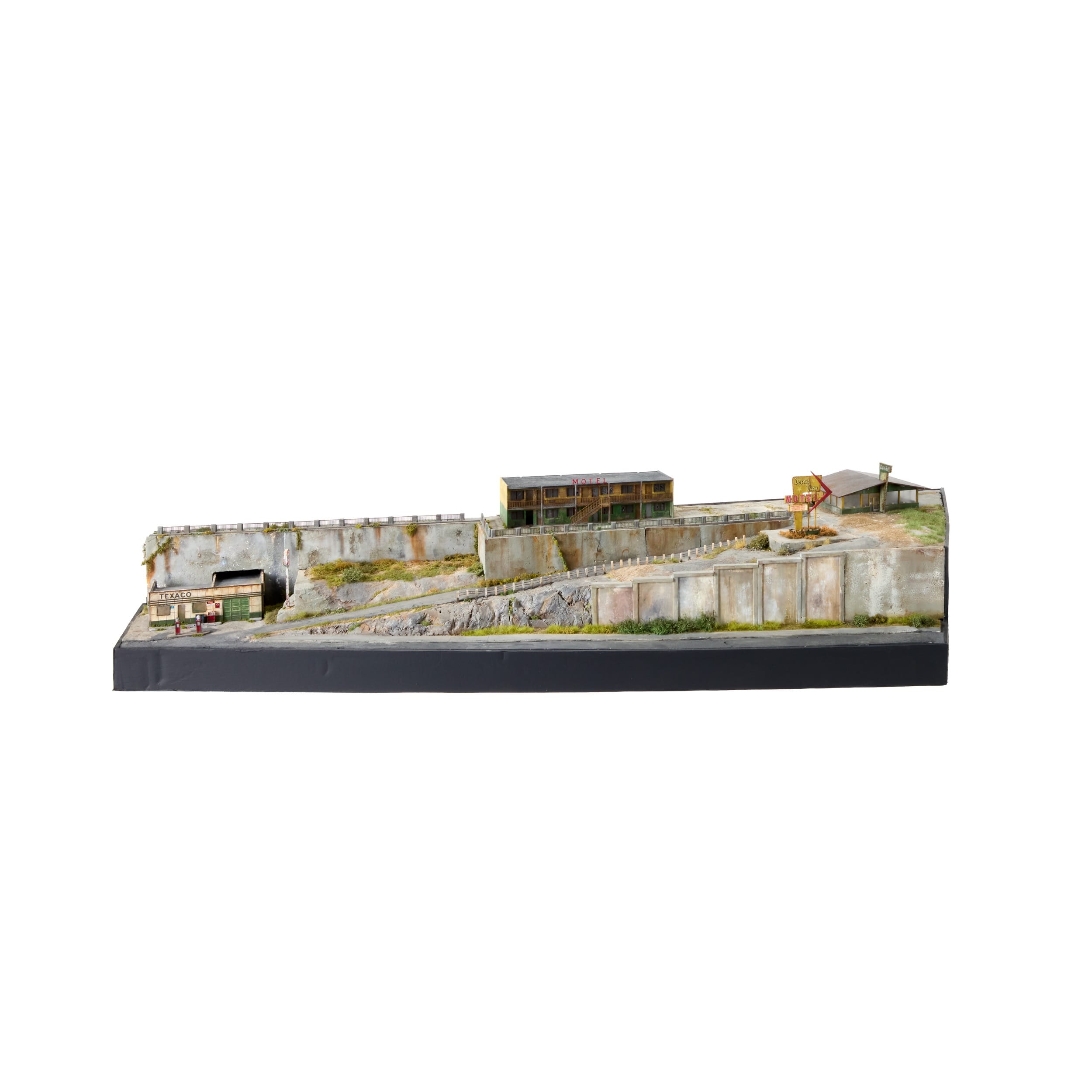
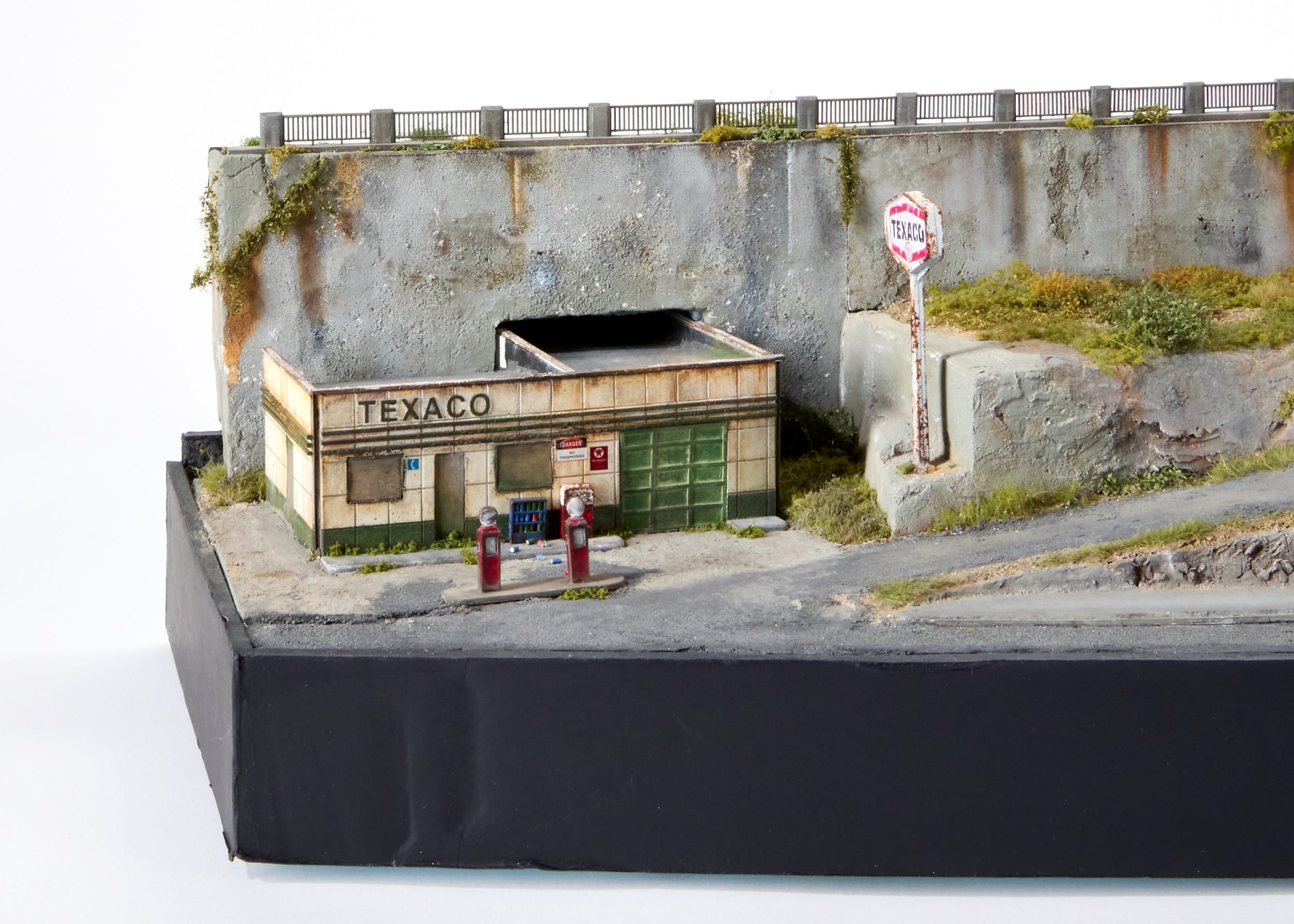
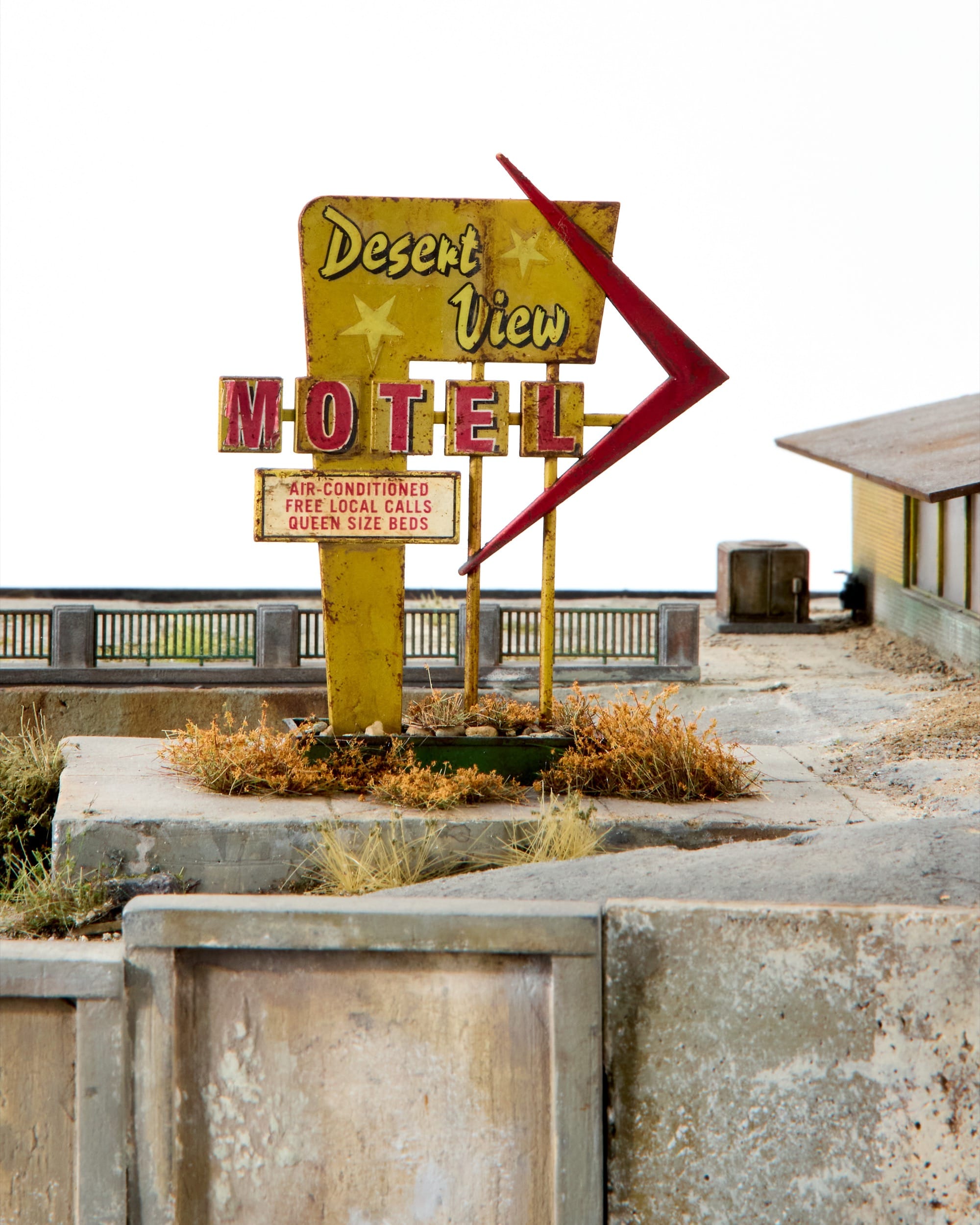
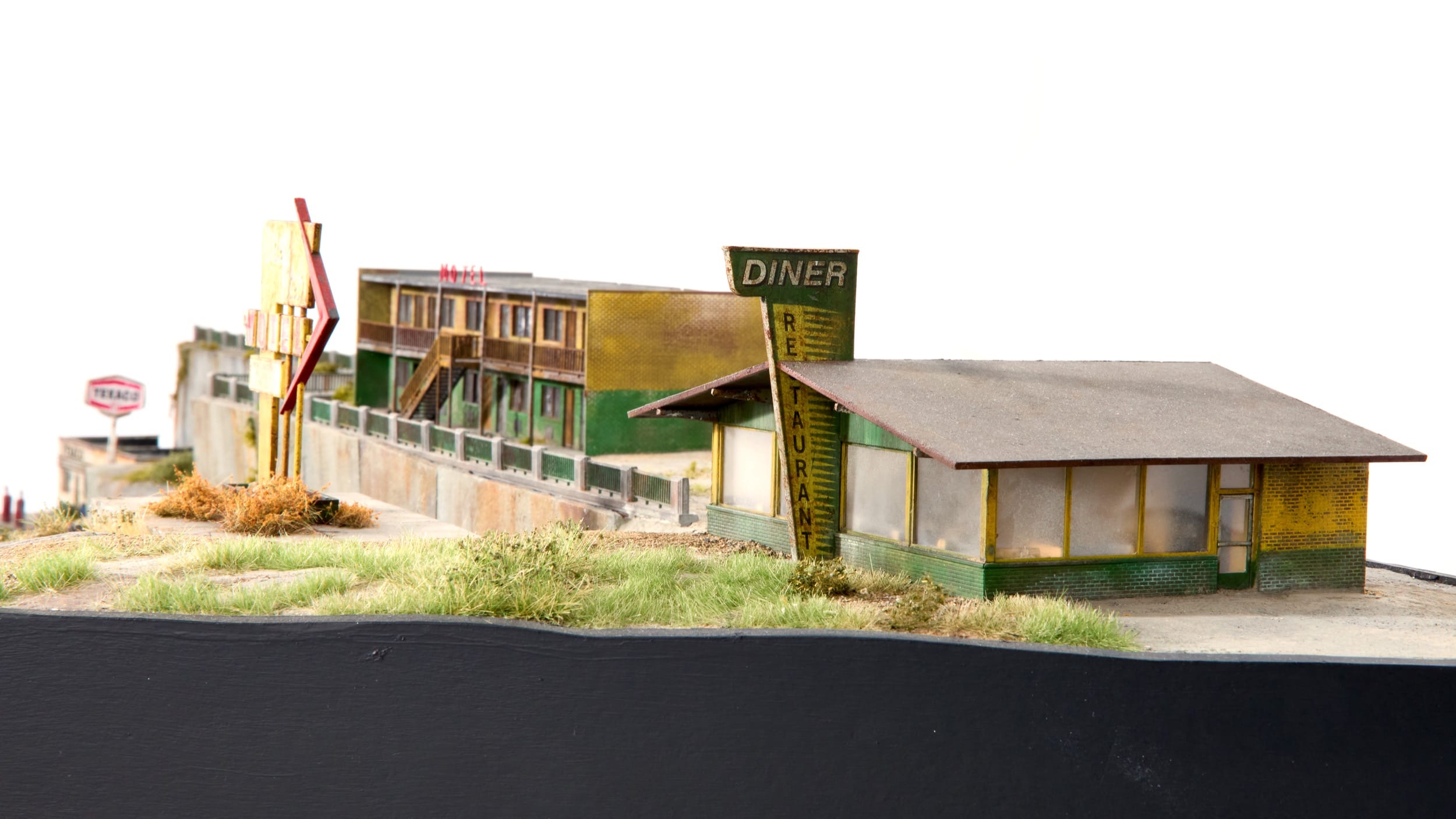
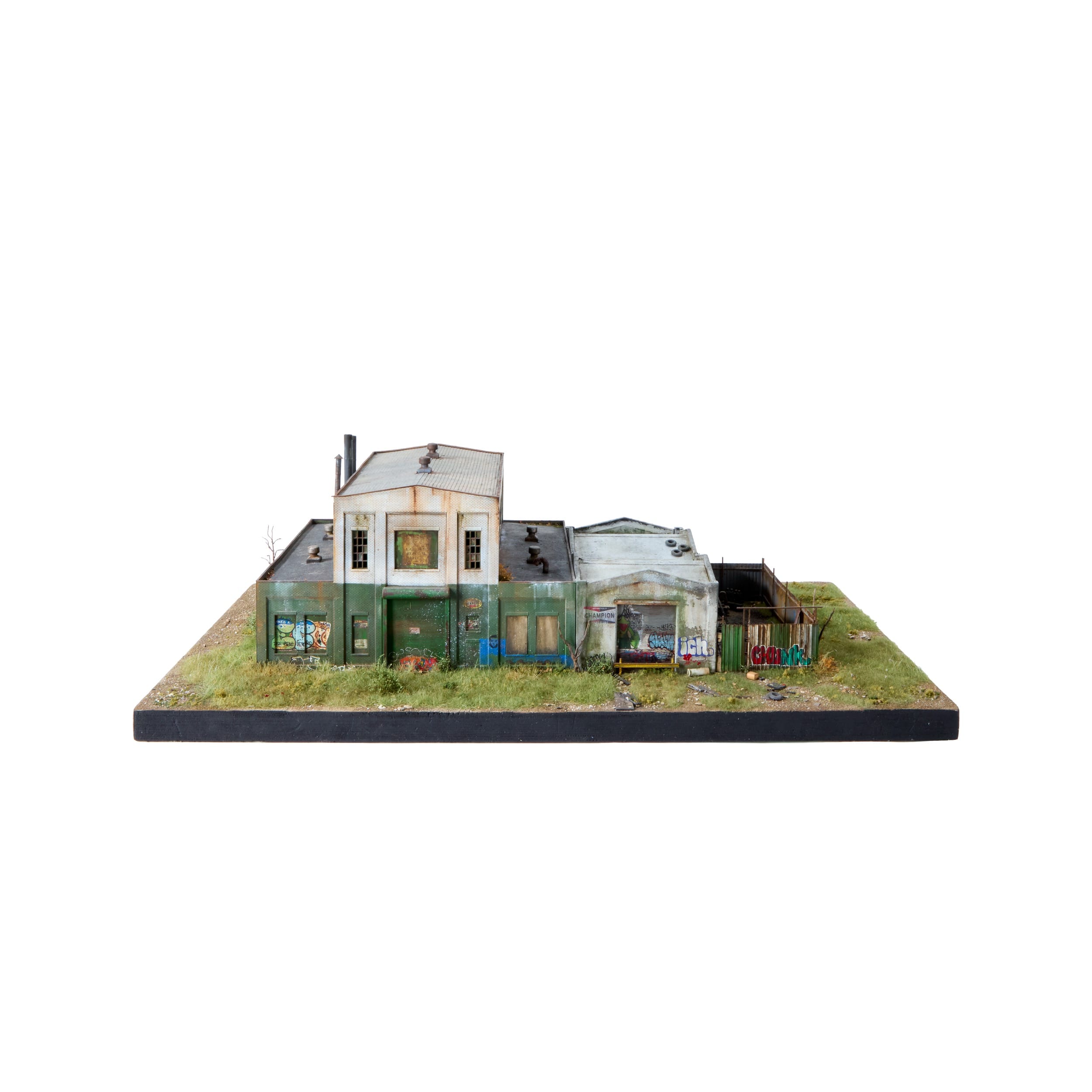
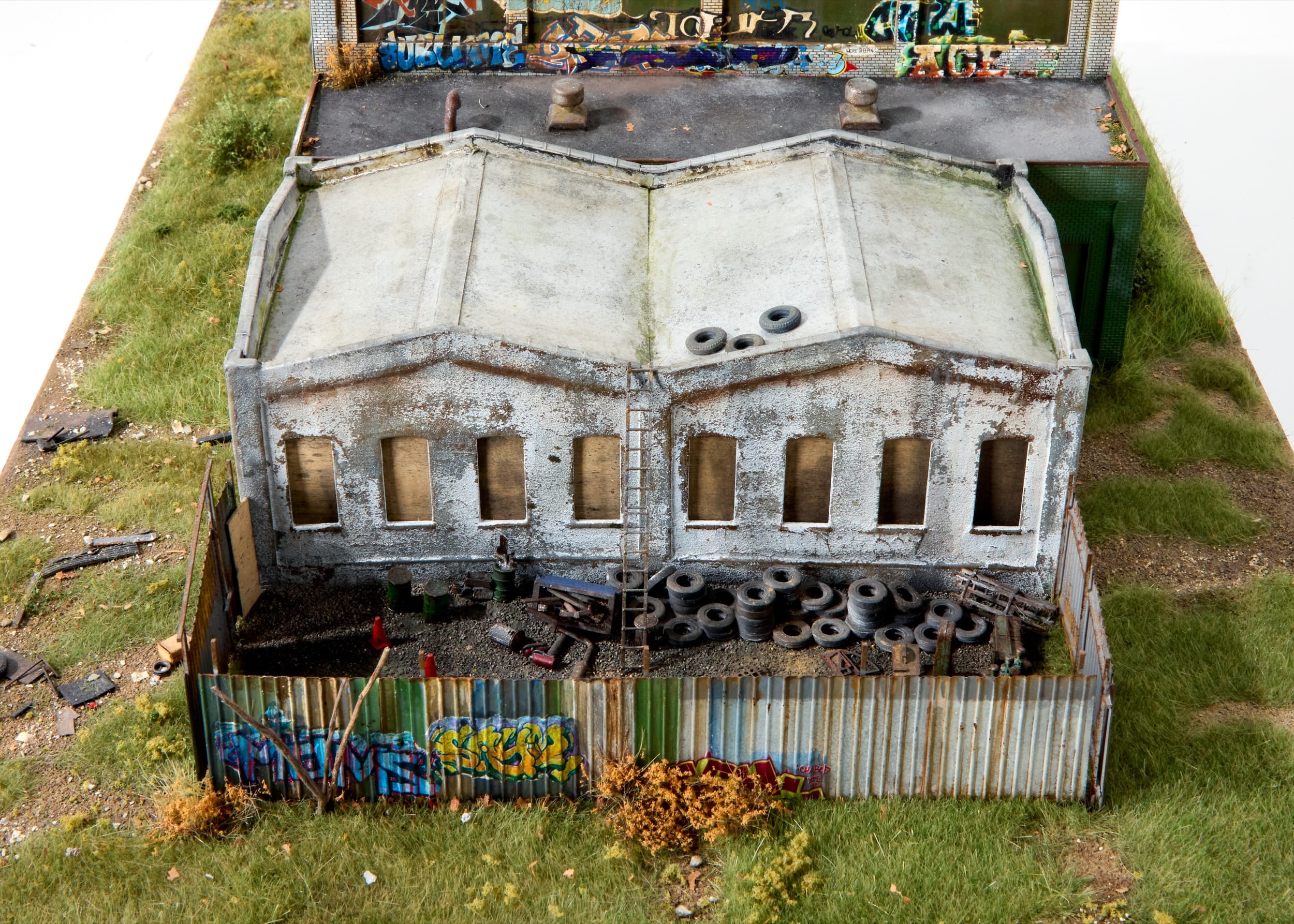
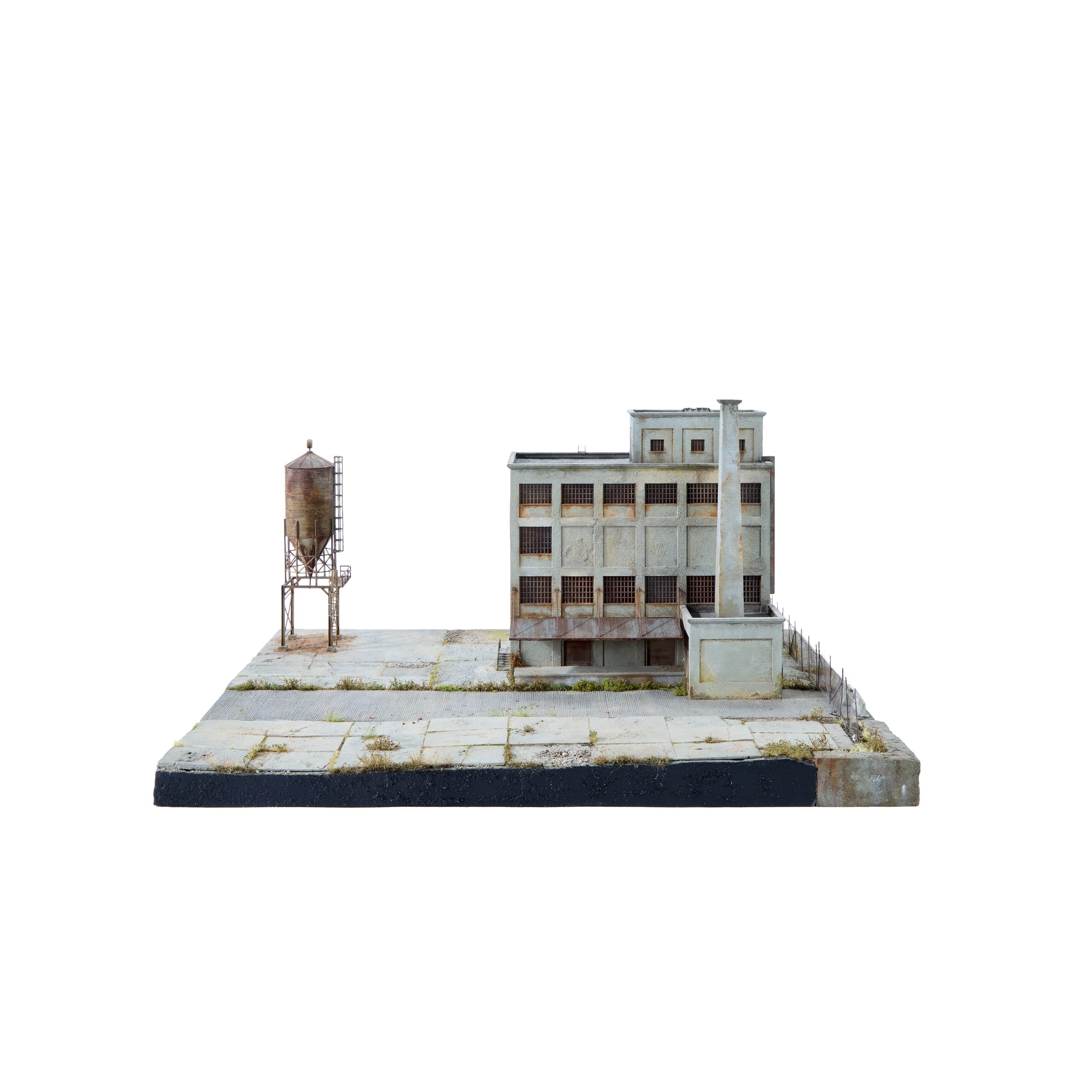
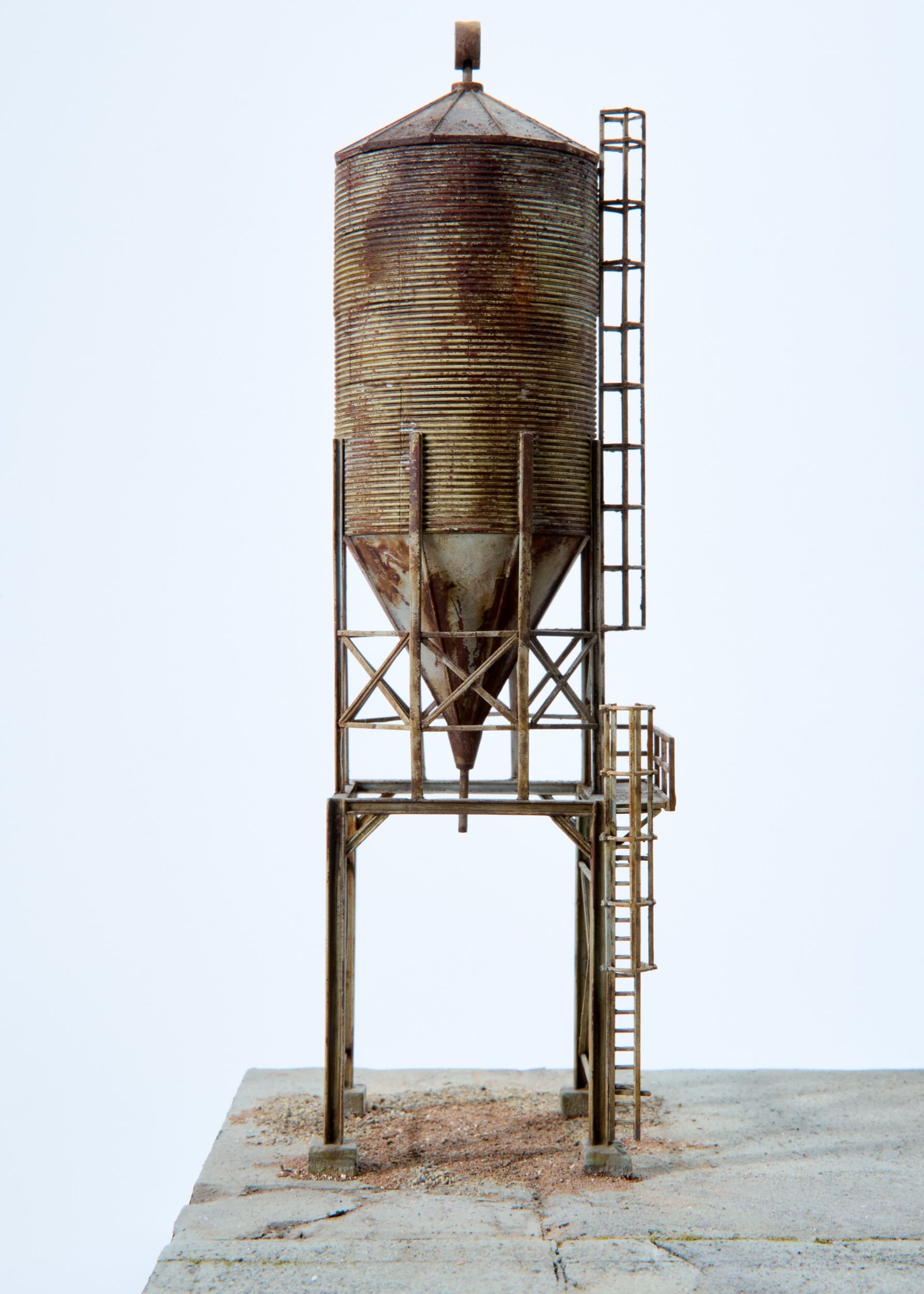
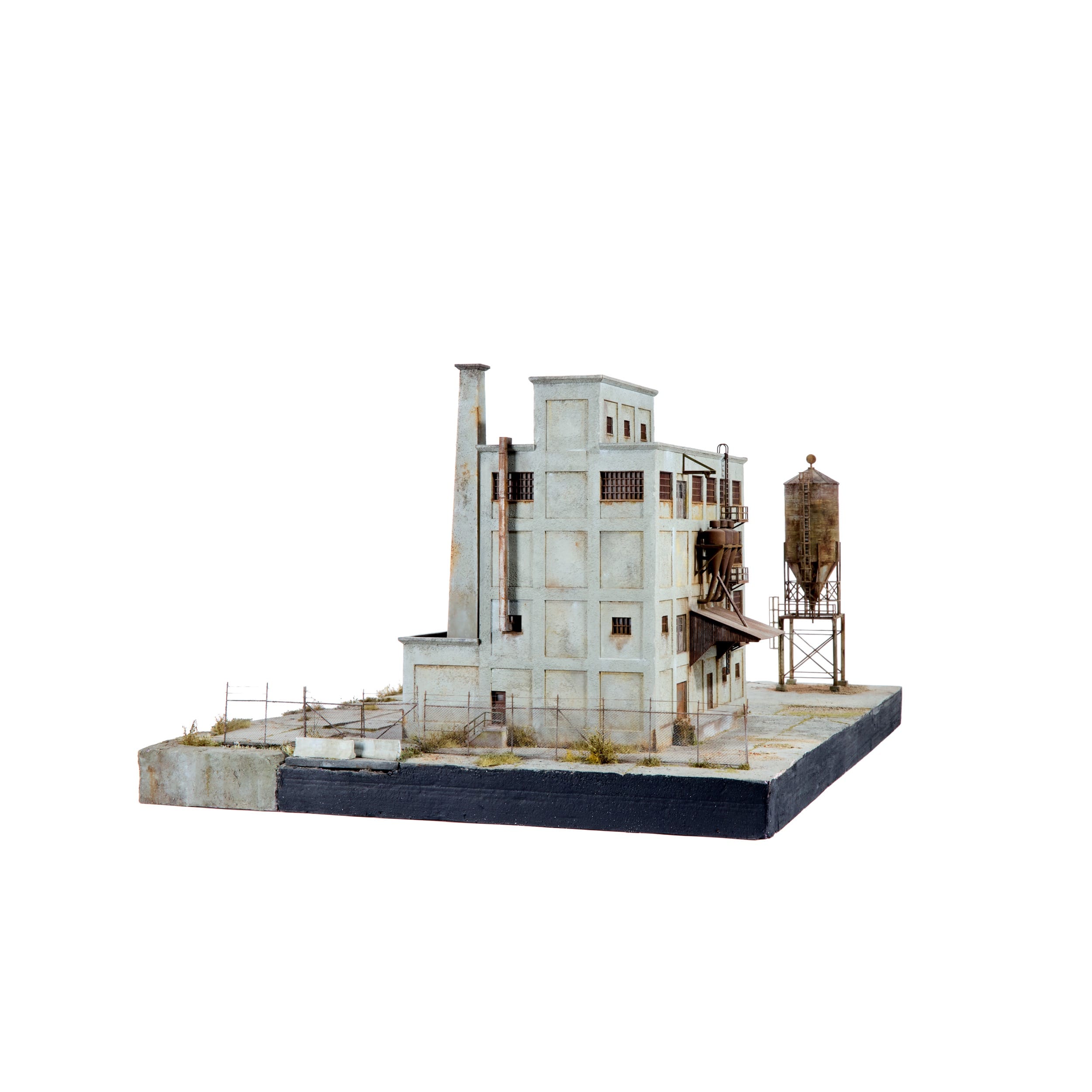
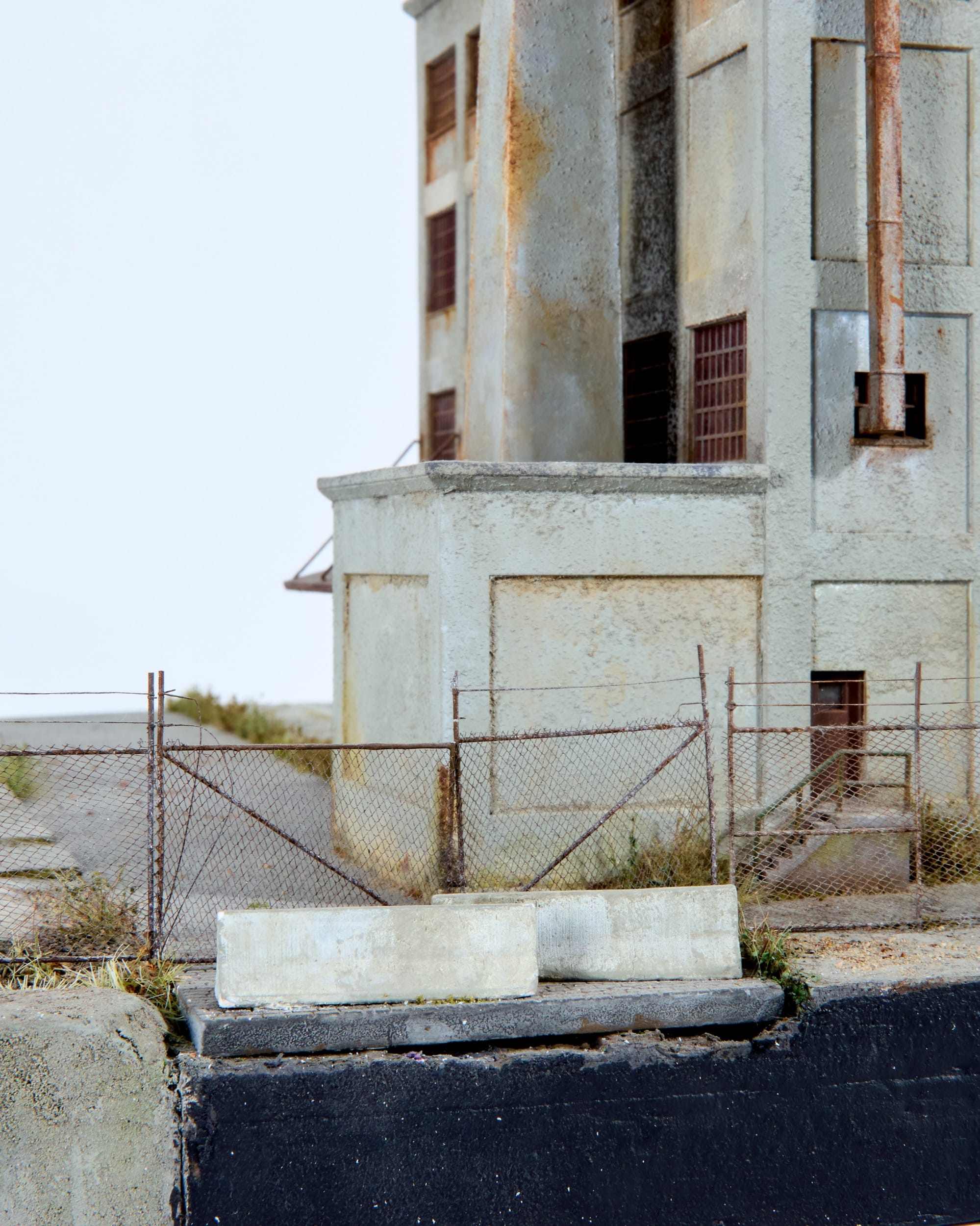
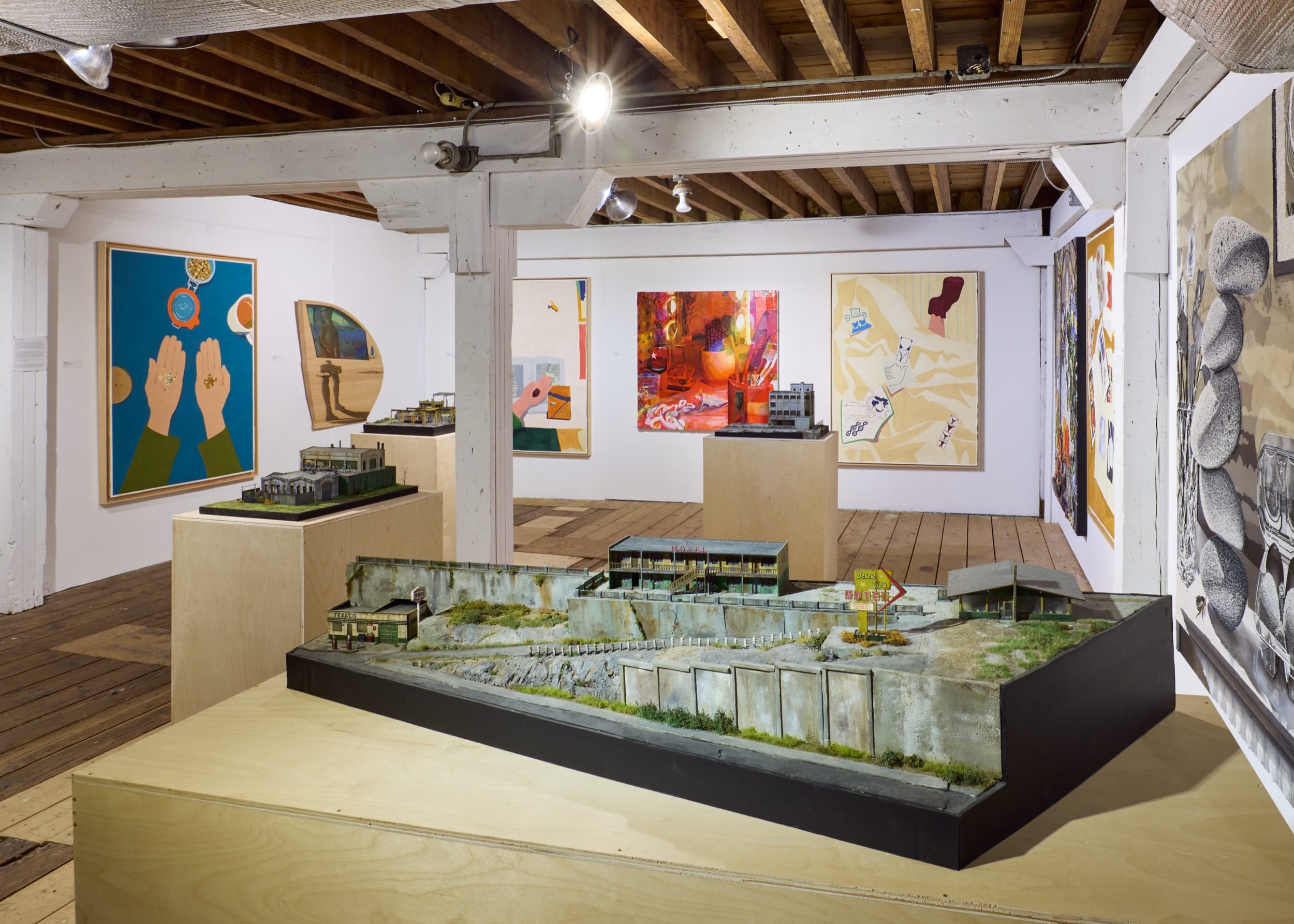
LC: There is something about the miniature that is very appealing. There is the practical accessibility of working on a small scale, but also the feeling of awe at seeing something so faithfully reproduced in miniature. What led you to work on a small scale, and do you use the same architectural scale throughout your work?
DG: When I began working, I lived in a small apartment and could not afford a studio space. I am also drawn to miniatures like many people and find it magical and mysterious. The scale so far has been consistent.
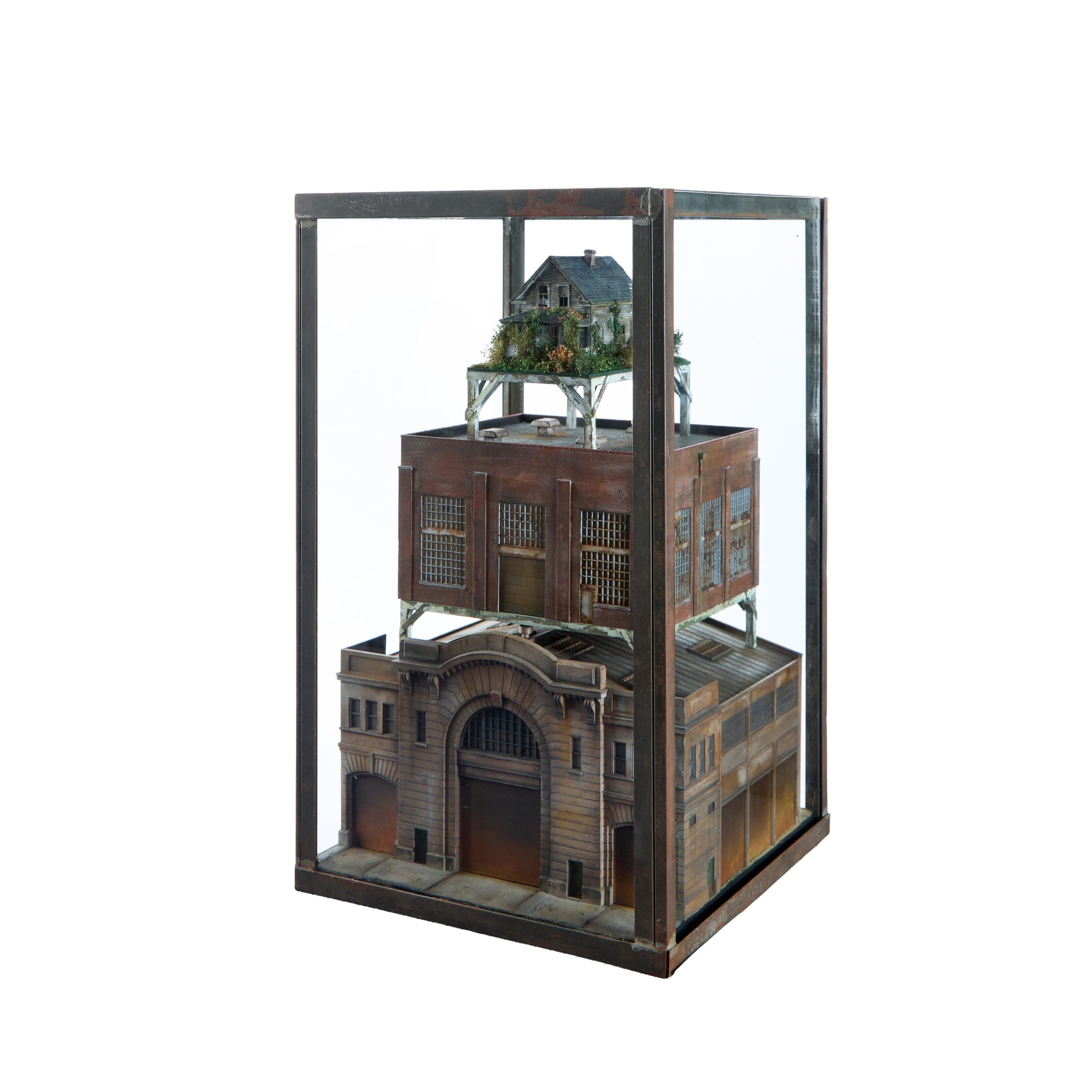
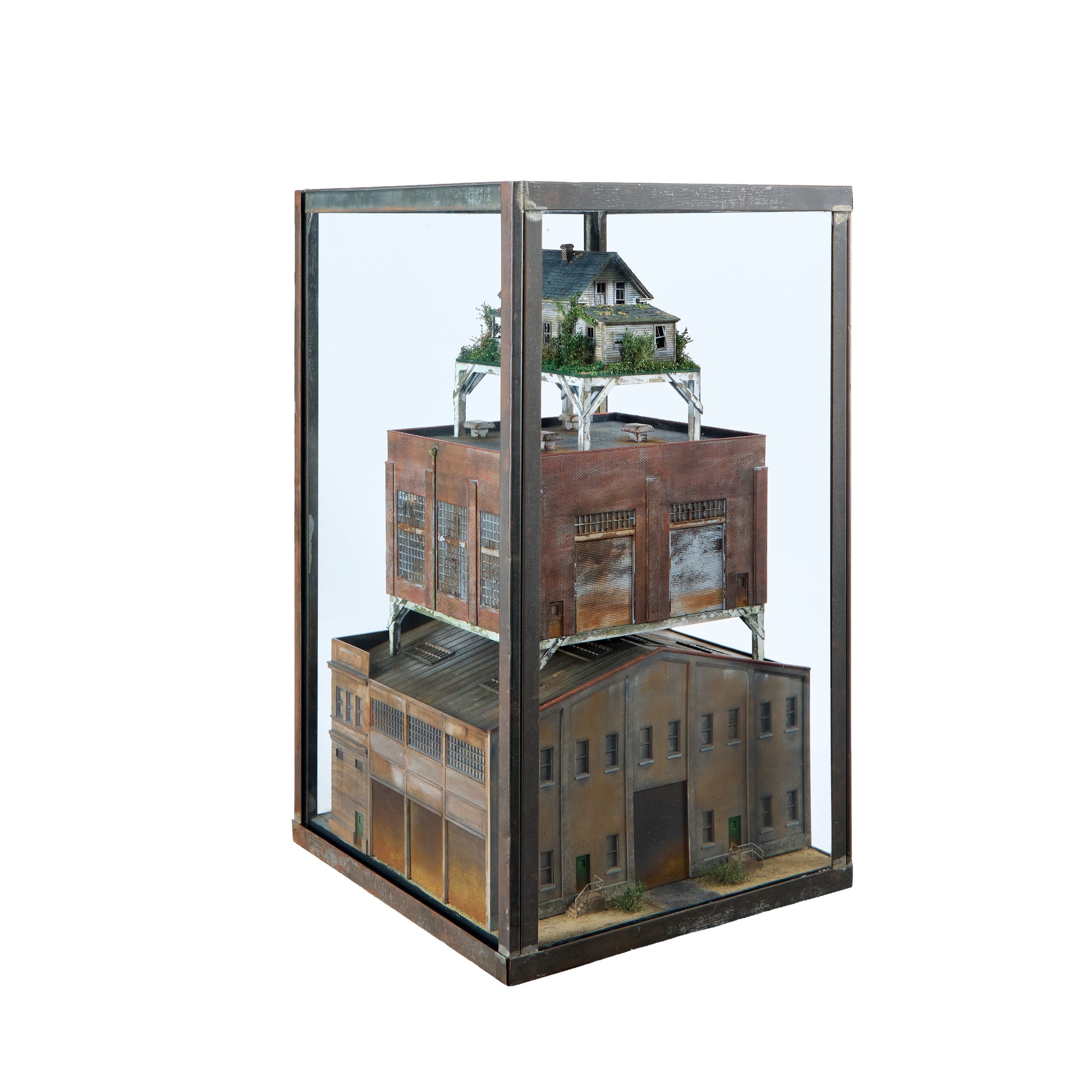
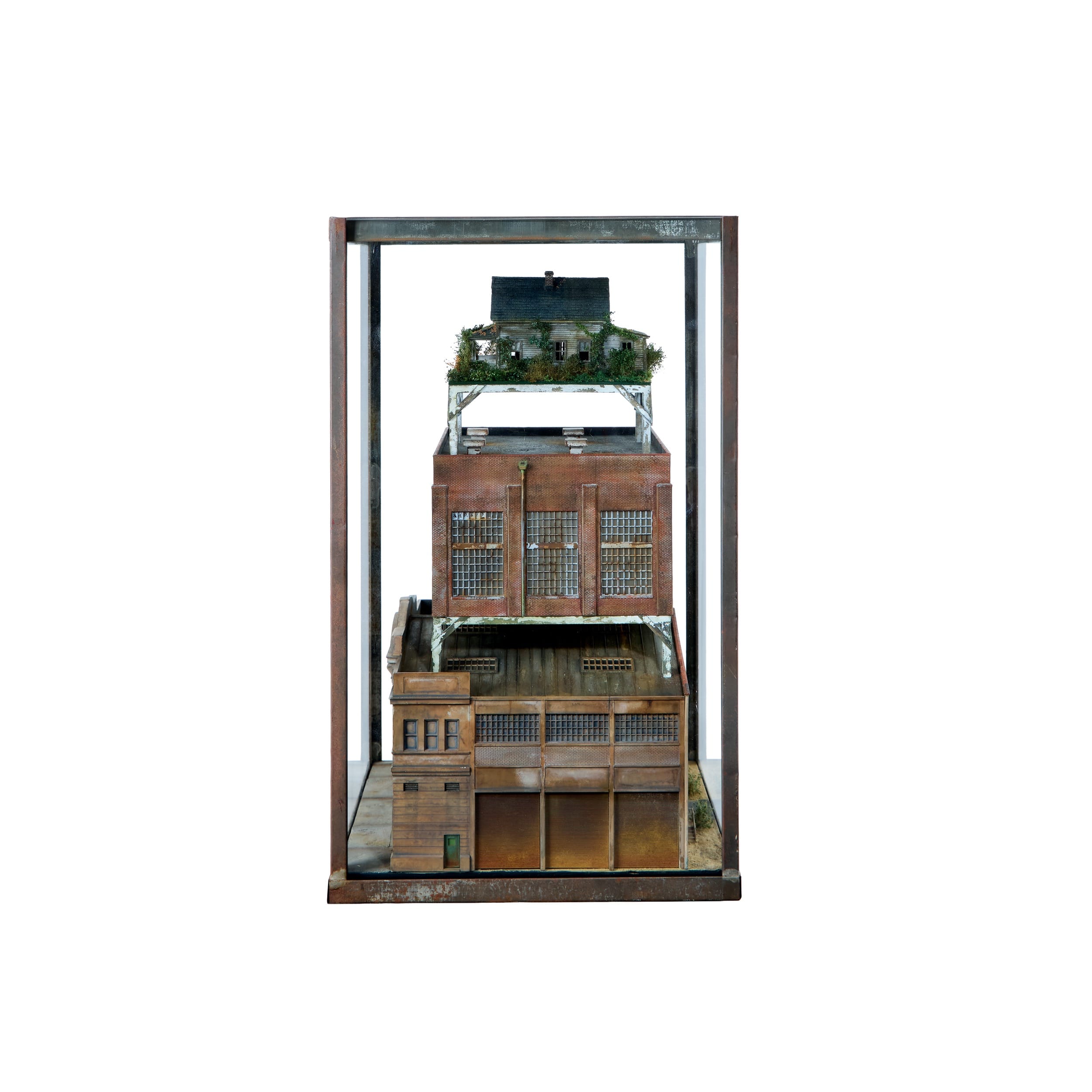
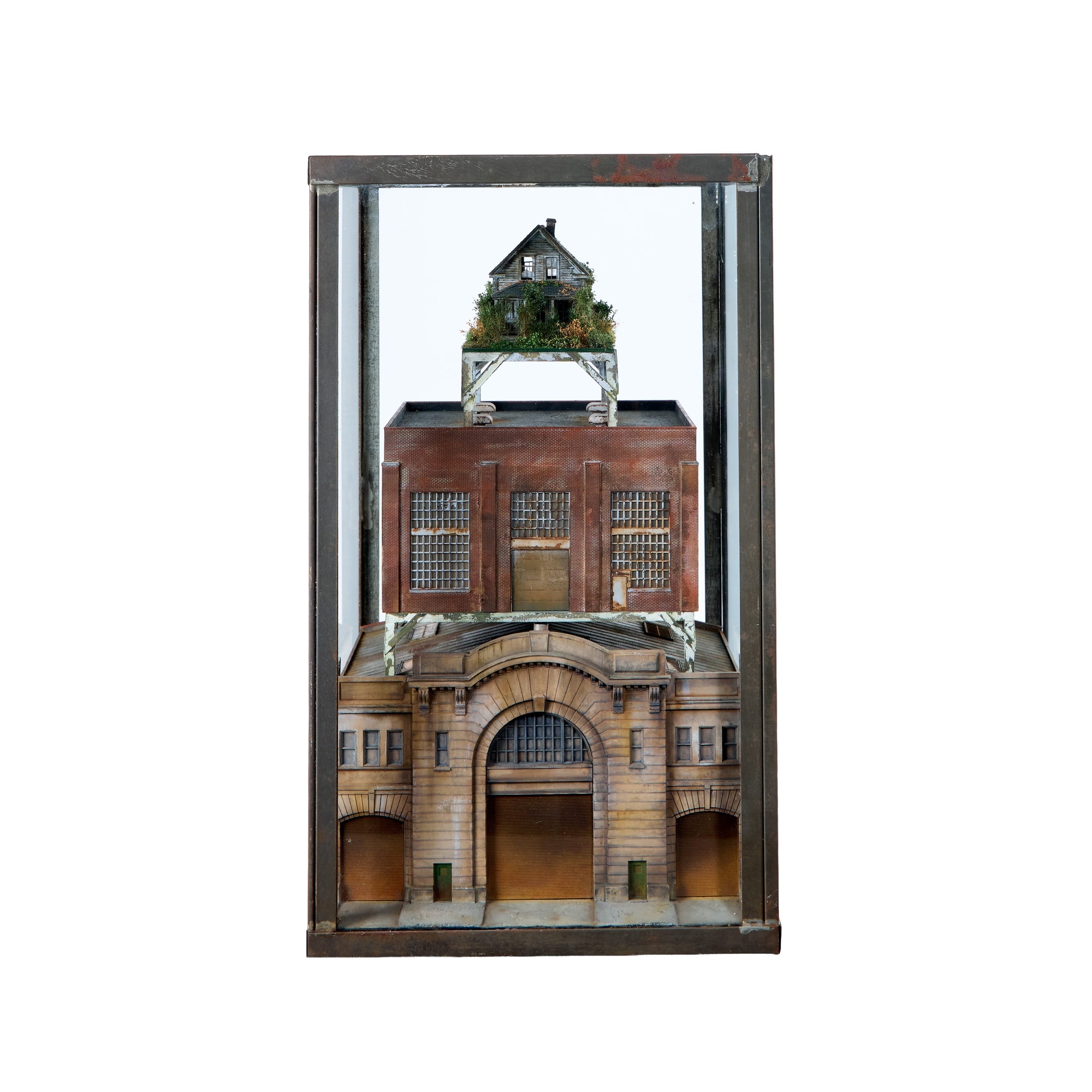
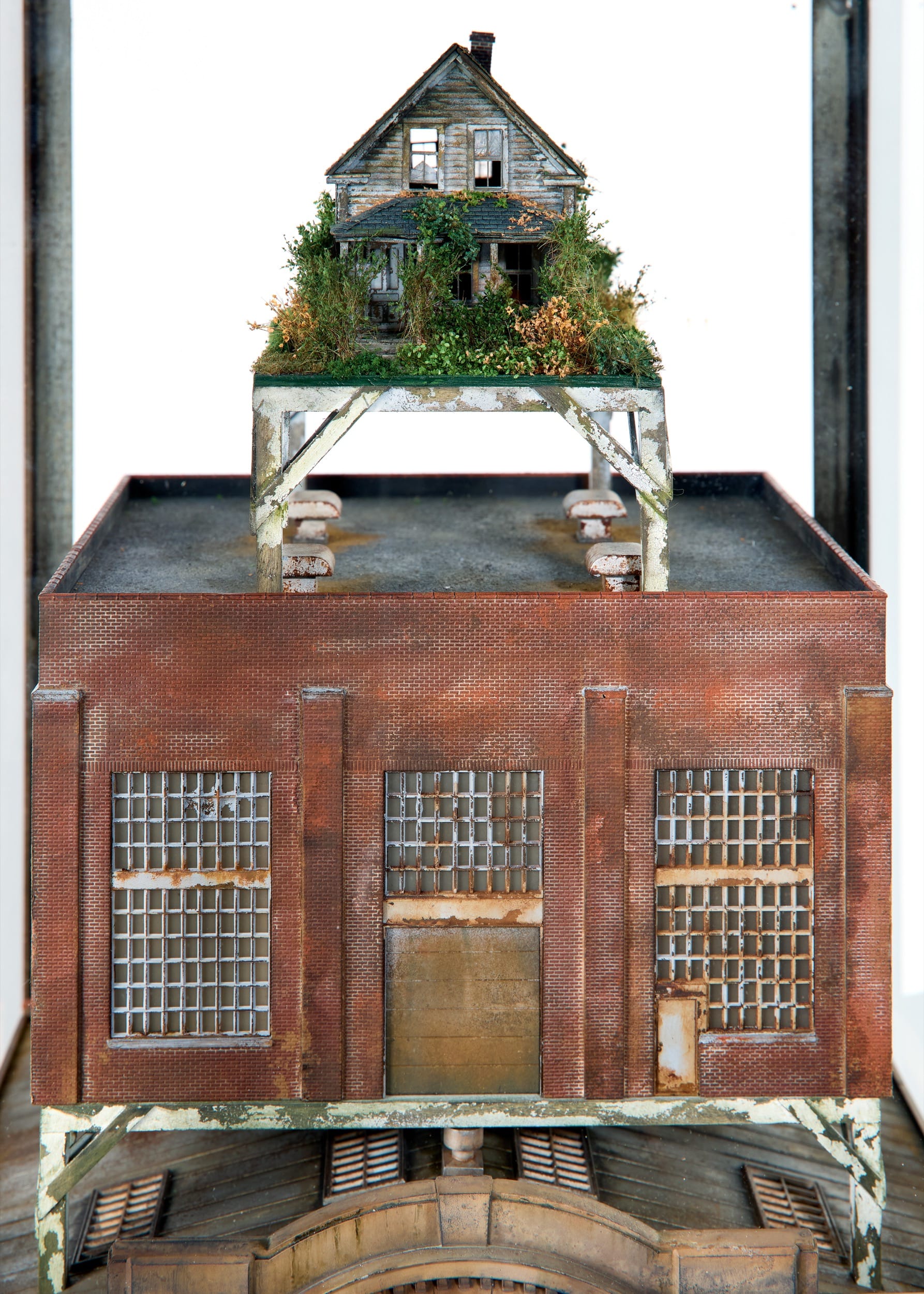
LC: In your piece in the current exhibition in the glass vitrine, entitled At Odds, there are three disparate abandoned buildings placed one on top of another. Unlike many of your other works, these structures are removed from their immediate surroundings. The sculpture creates a pyramidal shape and depicts buildings where people once worked and lived. Can you talk a bit about the meaning of this wonderful piece?
DG: I felt like I needed to do something different, push myself a little. I love the design of antique glass showcases and wanted to incorporate the work into them. The piece I am working on now is in a showcase, also. I would like to encase work in the future. Once work is behind glass, something changes.